Somewhere over Istanbul, the woman in the seat next to me lost the fight with her tray table.
When the meal service arrived and she put her tray table down, the arms wouldn’t lock in properly.
This left the table tilted downward, enough that her meal tray kept slipping toward her lap. Between bites she kept catching it, readjusting, trying again.
More force. Less force. One angle, then another, doing everything in her power to get the arms to lock.
With each unsuccessful attempt, I could watch her frustration build.
Eventually, she hit a threshold and resigned herself to her circumstances.
Her six-year-old daughter sat in the window seat, eating, seemingly aware of her mom’s struggle.
Feeling the desire to help I reached into the seat pocket in front of me. I dug around for a bit, grabbed the in-flight menu, and folded it in half a couple of times until it looked like the right size.
I held it up to her, gesturing my intention and she gave me the okay.
I took the folded menu and fit it snugly into the crack where the tray table hinges in half. A perfect barrier that stopped the tray from slipping.
Not quite MacGyver, but it did the trick.
She gave me a smile of relief, thanked me with her eyes, and I went back to my business.
Just moments after, I looked over and saw the daughter folding her own menu the exact same way, and wedging it into her own tray table. Nothing was sliding into her lap but she copied the fix anyway.
It’s incredible how as children we can’t help but automatically model the people around us.
Her daughter was copying the visible solution. The part of it she could actually see. But the real magic is in the thinking that unleashes creative solutions.
How flexible are you in thinking outside of the box for creative problem solving?
Reflecting back on the mother’s struggle, I think I know why she couldn’t solve the “puzzle” in front of her.
My guess: she saw the tray table as just “a tray table.” And that perceptual category locked her into a set of solutions for getting the tray table to act like a tray table.
Lock it, force it, fold it, angle it.
Spoiler alert: the table wasn’t working as intended, and no amount of trying to make it behave like one was going to fix that.
So what was some of the thinking that led me to a workable fix?
The first move was dropping the category and seeing things at the sensory level. Not just “a tray table,” but a flat, lightweight, thin rectangle with a hinged gap that folds in half.
Same with the menu. I didn’t see it as “just a menu.” I saw a thin, foldable piece of cardboard. Was it a menu? Sure. Could it also be a fan? A paper airplane? Something to write on? A wedge for a gap that needed blocking? Clearly, yes.
Two skills: taking the category off to see things with fresh eyes, and then the perceptual flexibility to see things in new and creative ways.
Most people perceive things too rigidly, boxed in by the linguistic categories they place on the world around them. This is a “menu”. This is a “broken tray table”. That is “rude”. This is a “problem”.
But is it just that?
The category subconsciously decides what is possible and what is impossible, and makes looking at the context with fresh eyes seem unnecessary.
These same patterns apply with people, including ourselves, perhaps with even more at stake. We see the “difficult client,” the “junior hire,”the one who’s “just not a numbers person”.
The thing with these linguistic categories is they blind us from seeing the thing for what it truly is, and it prevents us from seeing its full potential.
The more flexible you are with your perception, the more free you become to build authentic relationships, the more power you gain for authentic influence, the better you get at solving meaningful problems, and the more fulfilled and productive your life becomes.
Was the broken tray table a “small” problem? Perhaps yes, and for the mother at that moment perhaps not. But the thinking that solves problems applies across all contexts big and small.
How flexible are you with your power of perception?
At the end of the day I’m glad I could help the mother, and I’m optimistic that her daughter picked up a little more than just a menu-fold.
To your flexibility of perception,
Jason Schneider
Want to Learn More Neuro-Semantic NLP?
Here at the Perception Academy, I am on a mission to spread this information as far and wide as possible so I will continue to share as much of this cutting-edge material as I can.
Online Courses
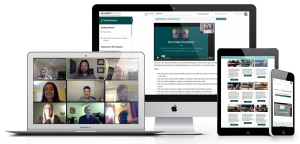
The courses are designed in a way that is well organized for your ease of learning, information retention, and immediate application to deliver a life-changing experience for you and those with whom you communicate.

INSIDERS Group Membership
Want ongoing support? Get INSIDER level course access, two live events & online courses/month, two monthly practice sessions, Q&A calls, a private group for mutual support and more...
Private 1-1 Coaching
Want to work with me privately for 1-1 coaching or mentoring via video chat? While I typically have a waiting list for private sessions, you can learn more and apply here.