If you’ve ever done some training or study into goal setting you know that your goals should be ‘realistic’… but how do I know if my goals are realistic or not? And if you’re coaching someone else, how do you know if their goals are realistic?

Over my coaching career of the past 10+ years I have had many situations where my intuition gave me a sense that my client’s goals weren’t realistic. However when I would confront them and ask them “Is that realistic?” and they would say “yes” I wouldn’t know how to challenge them on it!
It really made me wonder. How can we determine, in a more grounded way, if someone’s goals are realistic?
In this article I will share the criteria that I use and that you will be able to use with yourself and others.
As human beings it is really easy for us to overestimate what we can achieve in a particular time frame because as human beings we have built in cognitive biases.
One of these biases is referred to as ‘the planning fallacy’ or ‘time optimism’.
We overestimate how much we can achieve and underestimate how much time and energy it will take.
So how do we know if our goals are realistic? The solution is to look back at your past as your frame of reference! Look back at your track record and use the past data as the reference for what would be realistically possible for you in a future time frame.
Some potential coaching questions would be:
- Have you ever done something like this before in the past?
- How long did it take?
- How much have you been able to accomplish in a particular time frame?
- How much more productive can you become in a particular time frame?
For example if someone you are working with has a desired outcome of “I want to make 6-figures in my business this year” powerful coaching questions would be:
- Have you ever done that before?
- How much did you make last year?
- How much has your business been growing per year over the past 2+ years?
Or if someone has a goal that they want to weigh X by the end of the year we could ask:
- Have you ever done this before?
- How much weight did you lose over the past month?
We are using our past performance as the criteria as for what would be realistic for the future.
It is important to note that using somebody else’s results is not ideal for determining what is possible for ourselves so be weary of ‘testimonials’ that promise extraordinary results. Just because somebody else has done it doesn’t necessarily mean that you can do it in that time frame so aim to measure yourself against yourself.
Now you might be thinking, what if I have never done this goal before? What if it is my first year in business, or my first time attempting a weight loss goal, etc?
If this is the case it is perfectly okay to just make your best guess. Nobody is psychic or knows exactly what would be ‘realistic’ or not so think of your goals like an experiment.
Make a hypothesis that you can achieve X in Y time frame and when you get to the end of the time frame look at the results of your experiment.
In making your best guess it becomes really important not to be attached to the outcome but to be more focused on doing the things you need to do and doing those things joyfully.
By coming to your goals with an experimental mindset you’ll build up a track record of data that you can use to become better at predicting what is realistic for you for the future. Over time you will be strengthening your predictive powers and become more skilled at setting stretch goals that are healthy and realistic.
Leave your questions and comments here.
Want to Learn More Neuro-Semantic NLP?
Here at the Perception Academy, I am on a mission to spread this information as far and wide as possible so I will continue to share as much of this cutting-edge material as I can.
Online Courses
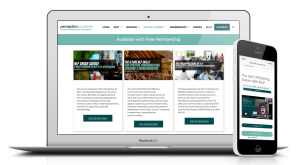
The courses are designed in a way that is well organized for your ease of learning, information retention, and immediate application to deliver a life-changing experience for you and those with whom you communicate.
INSIDERS Group Membership
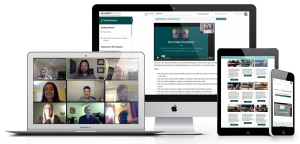
Want ongoing support? Get INSIDER level course access, two live events & online courses/month, two monthly practice sessions, Q&A calls, a private group for mutual support and more...
Private 1-1 Coaching
Want to work with me privately for 1-1 coaching or mentoring via video chat? While I typically have a waiting list for private sessions, you can learn more and apply here.