Have you ever spent hours on a task, tweaking every tiny detail, only to miss your deadline or feel frustrated with the result? That’s the perfectionism trap.
While perfectionism is driven by the desire to perform at our best, it often has the opposite effect. Paradoxically, it can lower our performance—or worse, lead to inaction altogether.
As a former perfectionist myself, I want to share insights on overcoming this mindset. By the end of this blog, you’ll have actionable strategies to break free from perfectionism and unlock your full potential as a peak performer.
Perfectionism’s Trap: “Not Good Enough” Thinking
Perfectionism stems from a good intention: to perform at our highest level. However, this mindset often backfires by fostering self-judgment, procrastination, or burnout.
One way to spot perfectionism in action is through our language patterns—whether in our thoughts or conversations. Here are some common examples:
- “I want to do my best.”
- “It’s not good enough right now.”
- “It wasn’t good enough; I should have done better.”
If you recognize these phrases in your inner dialogue, it’s a sign perfectionism might be holding you back. These words, while seemingly harmless, reflect a deeper mindset of comparison and unrealistic standards. When we think something isn’t good enough, we’re often comparing it to an idealized version of the future or someone else’s years of experience—neither of which is useful in the present moment.
Shifting to Optimization Thinking
The solution lies in adopting an optimization mindset. Optimization isn’t about achieving perfection; it’s about working within intentional constraints to produce results that are good enough for now. These constraints are what free us from the endless cycle of overthinking and overworking.
For example, instead of trying to write the “perfect” article, I might decide to spend 30 minutes on it. At the end of those 30 minutes, whatever I’ve written is good enough to publish. This approach allows me to make progress, release my work into the world, and receive feedback that I can use to improve in future iterations.
Constraints like time limits or deadlines are tools for optimization. They prevent us from spiraling into endless tweaking and help us focus on action. By setting clear boundaries around how much time or effort we’ll dedicate to a task, we create the freedom to move forward without guilt or regret.
Overcoming “Could Have Done Better” Thinking
Looking back at past efforts, perfectionism often whispers, “I could have done better.” But could you really? The truth is, you did the best you could with the resources and knowledge you had at the time.
Rather than critiquing your past, ask what you can learn from it. Each experience, no matter how imperfect, is an opportunity to reflect and grow. The belief that “I did the best I could at the time” not only frees you from unnecessary self-judgment but also creates space for improvement in your next iteration.
Iteration Over Perfection
One of the most liberating mindsets I’ve adopted is seeing life and work as a series of iterations. Each action you take is an iteration—not the final product, but one step closer to it. When you shift from perfectionism to iteration, you let go of the need for flawless results and instead focus on continuous improvement.
For example, when I create videos or write, I no longer aim for perfection in the first attempt. I focus on producing something that’s good enough for this iteration. Once it’s out in the world, I use the feedback I receive to refine my approach. Over time, these small, imperfect actions compound into significant progress.
And by combining the optimization mindset with a risk-free progressive practice—low-stakes opportunities to refine your skills—you’ll have the safety required to put your “imperfect iteration” out into the world and develop the confidence and competence to achieve your goals over time.
The Power of Constraints in Action
Constraints are not limitations—they are tools for liberation. By intentionally choosing how much time or effort a task deserves, you can avoid the perfectionism trap. For example, I might decide that a blog post deserves one hour of focused work. If it’s not “perfect” at the end of that hour, it’s still good enough to publish. This approach creates clarity and prevents me from over-investing time in tasks that don’t require it.
Constraints also help us measure and improve. As I repeat this process, I gain a better understanding of how much time certain activities truly require. This allows me to optimize further, ensuring I allocate my energy and resources effectively.
Letting Go of Perfectionism for the Long Term
The paradox of perfectionism is that letting go of the need for perfection in the short term is what allows you to achieve excellence in the long term. When you embrace optimization and iteration, you free yourself to take action, learn, and grow. Over time, these small steps bring you closer to your ideals in a way that perfectionism never could.
It’s important to recognize that having high standards isn’t the problem. In fact, striving for excellence is a wonderful thing. The key is to balance those aspirations with the understanding that progress happens in stages. Give yourself permission to grow over time, rather than expecting perfection right now.
In Closing
Perfectionism often shows up as “not good enough” thinking, whether in the present, past, or future. The antidote is adopting optimization thinking: setting constraints, taking action, and iterating over time.
By letting go of perfectionism, you’ll not only accomplish more but also experience greater ease and satisfaction along the way. Remember: it’s good enough for now. Keep iterating, and you’ll be on the mastery pathway of unleashing your potential.
If this resonates with you, I’d love to hear your thoughts or questions. Leave a comment below or share this with someone who might benefit. And if you’re ready to explore these ideas further, feel free to reach out—I’d be happy to help
Want to Learn More Neuro-Semantic NLP?
Here at the Perception Academy, I am on a mission to spread this information as far and wide as possible so I will continue to share as much of this cutting-edge material as I can.
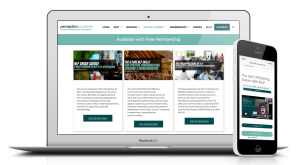
Online Courses
The courses are designed in a way that is well organized for your ease of learning, information retention, and immediate application to deliver a life-changing experience for you and those with whom you communicate.
INSIDERS Group Membership
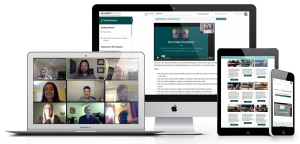
Want ongoing support? Get INSIDER level course access, two live events & online courses/month, two monthly practice sessions, Q&A calls, a private group for mutual support and more...
Private 1-1 Coaching
Want to work with me privately for 1-1 coaching or mentoring via video chat? While I typically have a waiting list for private sessions, you can learn more and apply here.